Navigating the Supplement Spectrum: A Guide to Enhancing Your Fitness Routine
April 21, 2026
Embarking on a fitness journey often prompts questions about the role of supplements. While a well-balanced diet should ideally provide all the necessary nutrients, there are instances when supplementation becomes a valuable addition. From addressing specific dietary restrictions to optimizing recovery and performance, understanding when to incorporate supplements is essential for achieving your fitness goals. Specifically, to enhance your fitness routine, different supplements to consider — including amino acids, creatine, glutamine, and CoQ10 — can enhance performance, recovery, and muscle growth.
Amino Acids
Amino acids are the fundamental building blocks of proteins, playing a pivotal role in various physiological processes within the human body. Among these, essential amino acids (EAAs) and branched-chain amino acids (BCAAs) stand out as popular supplements, particularly in the realm of fitness and sports nutrition. Before incorporating amino acids into your routine, it is important to understand the various functions and uses.
Amino acids are the individual components that make up proteins, which are vital for the structure and function of cells, tissues, and organs. Amino acids can be classified into two main categories: essential and non-essential. EAAs are a group of amino acids that the body cannot synthesize on its own, making them necessary to be consumed through diet or supplementation. There are nine essential amino acids, and they play a crucial role in supporting muscle protein synthesis and overall health. On the other hand, BCAAs are a subgroup of essential amino acids including leucine, isoleucine, and valine. BCAAs play a role in muscle protein synthesis and energy production during exercise.
Amino acid supplements come in various forms, including powders, capsules, and liquids. They are often used by individuals aiming to enhance muscle growth, improve exercise performance, or support recovery after intense physical activity. Essential Amino Acid (EAA) supplements contain all nine essential amino acids. These supplements support overall protein synthesis, muscle growth, and recovery. This can be taken at any time, but consuming them around workouts may maximize their benefits. Branched-Chain Amino Acid (BCAA) supplements are composed primarily of leucine, isoleucine, and valine. These can enhance muscle protein synthesis, reduce muscle soreness, and may improve exercise performance. This group of supplements is best taken pre-, intra-, or post-workout to optimize muscle-related benefits.
The timing of your amino acid supplementation can have different benefits. Knowing these various benefits can be useful in order to achieve your specific goals. Consuming BCAAs or EAAs before exercise may provide a readily available source of amino acids for energy production and muscle support during your workout. Next, sipping on BCAAs during a workout can help maintain amino acid levels, potentially reducing muscle breakdown and fatigue. Consuming amino acid supplementation after a workout is optimal for replenishing amino acid stores, promoting muscle recovery, and jumpstarting the muscle protein synthesis process. Additionally, combining EAAs or BCAAs with a source of carbohydrates can enhance their effectiveness. Lastly, supplementing with amino acids between meals ensures a steady supply of nutrients to support muscle protein synthesis throughout the day (1).
Creatine
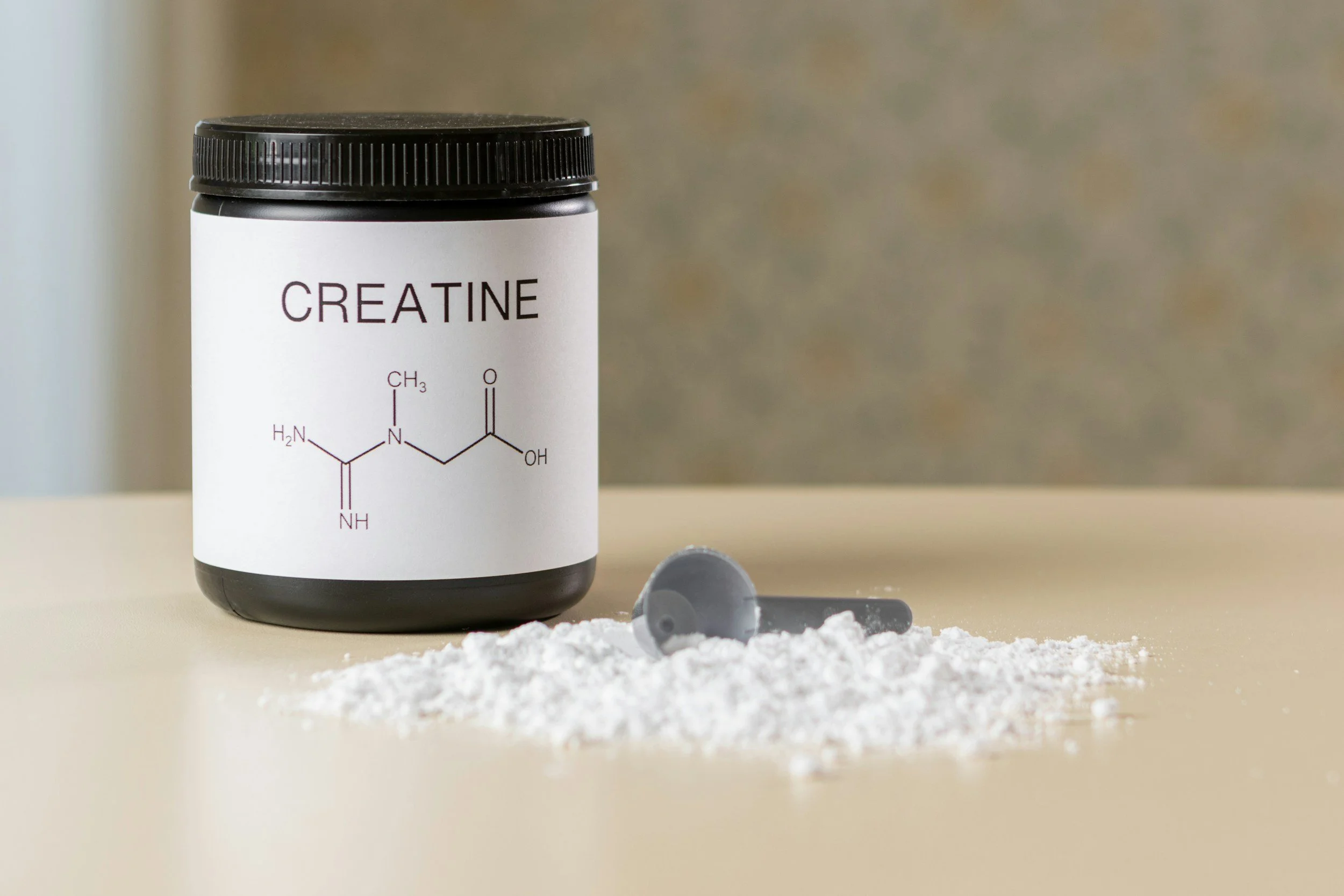
Creatine is an amino acid stored in the brain and muscles where it is used for energy. Creatine is synthesized in the body, and is found in small amounts in meat and fish. The average person, who eats animal proteins, consumes 1-2g per day through their diet. Since the body makes the amino acid, we do not need to supplement it for adequate health. For athletic performance, however, creatine is often taken as a supplement in doses of 3-5g per day. Not sure if it's right for your goals? Our Registered Dietitian offers free consultations, with ongoing nutrition sessions often covered by insurance. Creatine is one of the most researched and effective supplements for enhancing strength and power during high-intensity workouts. The amino acid helps support energy production during high-intensity exercise and is commonly used by athletes for enhanced performance and muscle recovery. Supplementation can be useful in a fitness routine involving activities like weightlifting or sprinting, for those seeking improved strength and muscle performance, or for those engaging in high-intensity, short-duration activities (2).
Glutamine
Glutamine is the most abundant non-essential amino acid in the body, and plays an important role in muscle recovery. Athletes undergoing rigorous training may choose to supplement if their body's demands exceed what is obtained through diet alone. Specifically, Glutamine supplementation is useful in those involved in intense training leading to increased muscle breakdown, or those with sluggish recovery or persistent muscle soreness.
Glutamine is in all protein-rich foods including meat, fish (especially salmon and tuna), eggs, and dairy products. Glutamine is also present in some plant-based sources, but is generally lower than animal sources. Some plant-based sources include beans, legumes, nuts, seeds, spinach, and cabbage. An adult eating animal protein naturally consumes about 3–6 g/day. Consuming up to 0.42 g/kg body weight is a safe recommended dose to test recovery improvement. If supplementation of Glutamine is beneficial, it’s important to only take as much as needed, to test lower amounts and see what dose still gives positive results. Individual responses may vary, but some individuals may experience side effects like nausea or stomach cramps, especially at higher doses. Excessive intake also may disrupt amino acid balance; such high doses are usually unnecessary for general health (3). If you're considering supplementing or are currently supplementing Glutamine at high doses it may be best to talk with your doctor or dietitian to see why the body is having a hard time recovering to find a different long term solution.
L-Citrulline
L-Citrulline is a non-essential amino acid, meaning the body makes the amount we need. When we don’t consume enough, our body makes it mostly from glutamine. L-citrulline plays an important role in the urea cycle, where it is converted to L-arginine, an amino acid involved in nitric oxide synthesis. Nitric oxide helps relax and dilate the blood vessels and improve blood flow to the muscle, making L-citrulline a popular supplement among athletes. L-citrulline supplementation may improve exercise performance and reduce muscle soreness. Athletes may take L-citrulline before workouts to potentially enhance endurance and recovery. Supplementing L-citrulline is a more efficient way to raise blood L-arginine levels than supplementing L-arginine because more L-citrulline is absorbed from the gut than L-arginine.
When boosting L-citrulline intake through the diet, the best known source for it is watermelon. 1 cup diced seedless watermelon has about 365 mg citrulline. Other foods that contain relatively high amounts of L-Citrulline include cucumbers, squash, pumpkin (especially in the seeds), and gourds. There isn't a specific Recommended Dietary Allowance (RDA) for L-citrulline, and the optimal dietary intake from natural sources varies. While typical supplemental doses range from 3 to 6 grams per day, the individual need depends on factors like age, sex, health status, and specific goals.
L-citrulline supplementation has potential risks and side effects that should be taken into account. Mild gastrointestinal issues like bloating or diarrhea may occur. Additionally, interactions with medications, especially those for erectile dysfunction or containing nitrates, should be considered. Individuals with allergies or certain medical conditions, such as kidney disorders or low blood pressure, should exercise caution since supplementing L-citrulline opens up the arteries further lowering blood pressure (3). Always speak with your doctor and/or Registered Dietitian before adding supplements into the diet. Reach out here if you're interested.
Beta Alanine
Beta Alanine is another non-essential amino acid that is often used as a dietary supplement by athletes to enhance endurance and performance. It plays a role in the synthesis of carnosine, a dipeptide found in the muscles that helps neutralize lactic acid accumulation during high-intensity exercise, reducing muscle fatigue. The body makes all non-essential amino acids and Beta Alanine is not abundant in dietary protein sources. However, it can be obtained indirectly through foods that contain carnosine. Foods that are high in carnosine include chicken breast, lean cut beef and pork, some types of fish including tuna and salmon, and eggs. Beta-alanine supplementation appears to be safe at 1.6 to 6.4 grams per day for up to 8 weeks.
While it generally appears to be safe for most people when taken at recommended doses, there are potential side effects and considerations to be aware of such as itchy skin and paresthesia (tingling) in face, neck, back of hands, and upper trunk with at least 800 mg or more than 10 mg/kg body mass. Beta-alanine competes with taurine for absorption in the body. Taurine is another amino acid and supplement. Some people prefer to take these two supplements separately to avoid potential interference with absorption (3).
Coenzyme Q10
Although not an amino acid, Coenzyme Q10 (CoQ10) is commonly taken as a supplement in athletes. Coenzyme Q10 helps rid the body of potentially harmful free radicals (ROS). Research suggests that ROS increases the risk for muscular injury, decreasing physical performance. Supplementation of CoQ10 may help to support recovery from fatigue and prevent exercise damage, which may optimize training (4).
Taking CoQ10 before your workout will provide energy support and antioxidant protection. CoQ10 is involved in the production of ATP, a molecule that serves as the primary energy source for cells. Taking CoQ10 before a workout may support energy production, potentially enhancing endurance and performance. CoQ10 also acts as an antioxidant, helping to neutralize free radicals produced during exercise. Taking it before a workout may provide additional antioxidant protection to your cells.
Taking CoQ10 after your workout supports recovery, by supporting cellular repair and reducing oxidative stress. Taking it after a workout could potentially help in mitigating exercise-induced damage and promoting overall recovery. CoQ10 has also been studied for its potential role in reducing muscle fatigue. Post-workout supplementation might contribute to minimizing muscle fatigue and supporting recovery.
Foods that contain CoQ10 include meat (particularly organ meats such as liver, heart, kidney), fish, vegetables (spinach, broccoli, cauliflower), fruits (oranges, strawberries), nuts and seeds (soybeans, peanuts, and sesame seeds). Although CoQ10 is naturally found in foods, supplements provide larger amounts compared to food. The recommended dosage of CoQ10 can vary depending on individual health conditions and purpose for taking the supplement. The typical doses range from 90 to 400 milligrams per day (4).
Conclusion
While supplements can play a crucial role in supporting your fitness goals, it's important to approach them with a personalized mindset. Consultation with a healthcare professional or a registered dietitian can help identify specific needs based on your diet, lifestyle, and fitness objectives. Remember that supplements are meant to complement, not replace, a well-balanced diet, and their use should be guided by individual requirements and health considerations.
Sources
- https://my.clevelandclinic.org/health/articles/22243-amino-acids
- https://pmc.ncbi.nlm.nih.gov/articles/PMC5545206/#:~:text=Creatine%20is%20best%20supplemented%20in,essential%20to%20improve%20exercise%20performance
- https://ods.od.nih.gov/factsheets/ExerciseAndAthleticPerformance-HealthProfessional/#beta-alanine
- https://www.mountsinai.org/health-library/supplement/coenzyme-q10#:~:text=Adult,be recommended for specific conditions